Aka, how to make a fight harder. For DM’s wanting to up their tactical game and challenge players without just inflating numbers. The Pincer is a classic. I’m going to talk about why it’s so dangerous and how to use it because, just like in real warfare, it’s power comes with vulnerability.
The Pincer Pattern
Previously, on DM War School, I talked about the Frontal Assault. Mainly about how that default combat shape usually makes fights easier on players. Well, today we’re doing the pincer which automatically makes things harder.
There’s many names for this pattern. Some call it a flank. Though in my book, a flank is an L-shaped situation. Yeah, don’t quote me in a military science discussion, haha. I need to distinguish between flanking and pincers for the war school is all. What’s important here is…
A pincer attack is when foes attack the party from opposite sides.
Usually this is done by splitting off half or less of one’s fighting force and sending them around to attack from behind. You can do left-right sides though, too. It’s fine. You’ll get what you want, which is a tight spot for the players.
Let’s examine a pincer ambush I’ve set up for an example.
“The players spotted a mysterious stone monolith sitting in the center of a pond. It bears red painted markings so they suspect it has to do with the blood goblin shaman they’re questing to kill. (It’s actually an old druidic symbol that the goblins have twisted.) At this time, the Fighter is fishing in the pond while the Cleric and the Wizard try to examine the monolith without getting their feet wet. The rogue is bored and is contemplating practicing his pick-pocketing on the Cleric."
“Unbeknownst to the players, their loud academic debate has drawn in a goblin patrol. The goblins will use cover and stealth to set up an ambush."
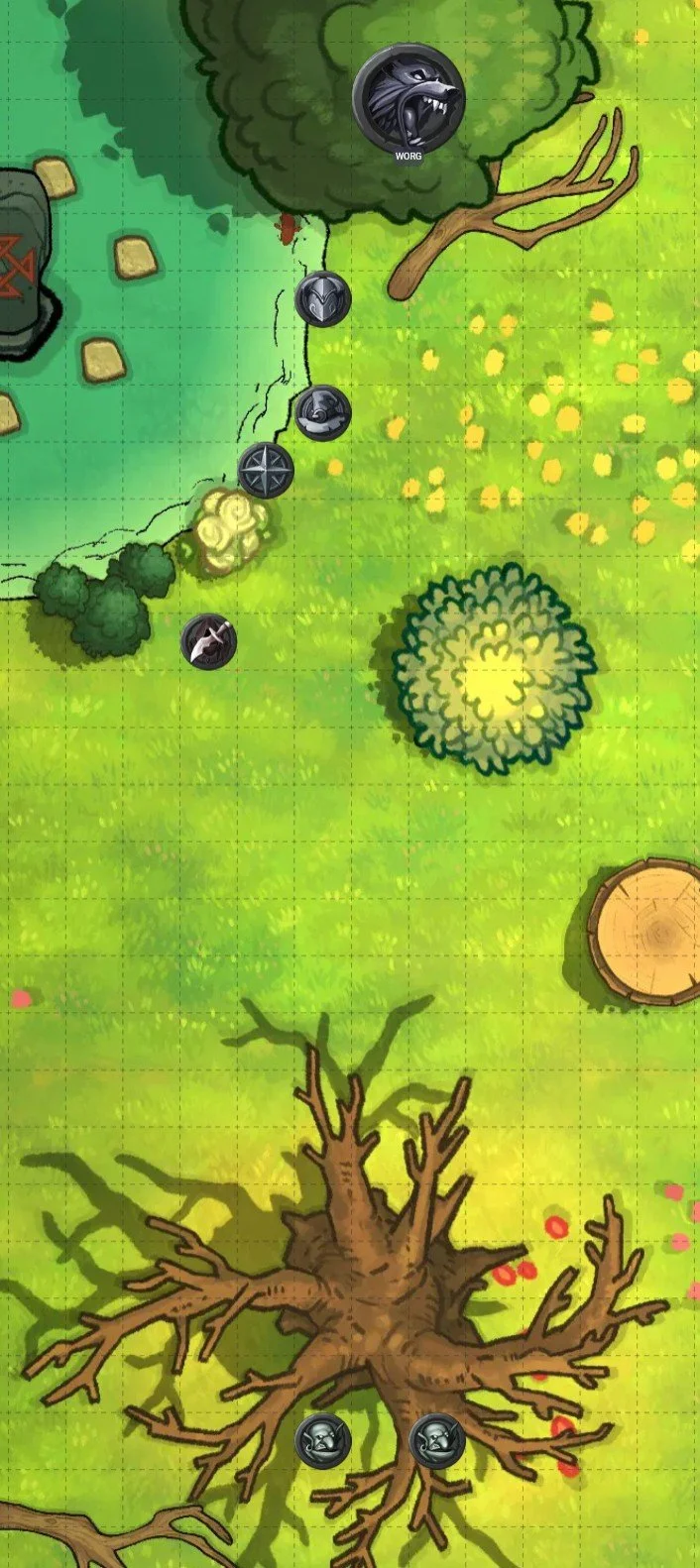
Worg in a bush!
Positioning the Pincer
Pincers are great because they expose squishy players to attacks, deny cover, and force the players to spread out their frontliners as well as their area-of-effect abilities. The enemies are more difficult to wipe out with blasts or control with entangles and such. It’s still doable, but more effort is needed.
Pincers are weak because they spread the enemy thin. Isolated foes are easy to team up on and kill. You’ve self-divided your force so the enemy could conquer one half, then the other, if they make the right moves.
In this case, I’ve positioned a worg in the bushes to the north because a worg has loads of HP and is a stronk melee combatant. The low-hp goblins are south with a huge dead tree they can use as near-total cover. If the players can’t see the goblins, on their turn, then it’s way harder to damage them.
If this was a 5e encounter vs 4 level 1 players, it would be deadly. If it was a frontal assault, I’d rate it as hard since the worg would just charge in and get teamed into the ground quickly.
As a pincer though? This is definitely deadly. If the goblins achieve surprise, then it’s a potential TPK.
(Honestly, I wouldn’t run this encounter on level 1s unless they all told me, “hey, we want the most brutal D&D experience possible. Throw us into the meat grinder! I have 5 backup characters!” Worgs alone hit above their CR and so do goblins. IMO, try this vs level 2s.)
Anyway, if this is a surprise attack, then the goblins are could drop the cleric on the opening using their shortbows while the worg has a chance to burst from the bushes and possibly down the fighter thanks to surprise advantage. It’s gonna be UGLY.
That’s a bit unrealistic to expect though because the worg isn’t that sneaky. The players will likely spot it and we roll initiative.
What’s really important here are the horrible opening choices available to the players.
The cleric and wizard are in the open and are going to eat arrows. They know it.
The fighter is alone vs a worg in their face. That’s like a boss-fight.
The rogue is also out in the open, but that fellow likely has high initiative and can fix it.
However, the rogue will be without an ally vs two goblins and they are overall at a loss for backstab opportunities.
No one can drop prone to defend against the goblins’ bows because that will make them into the worg’s #1 chew-toy.
This is the essence of the encounter. Each player, staring at the map, and thinking how screwed they are. Every one of them might be seeing how the enemy can easily take them out. That moment of fear, that thrill of deadly combat, is why we really do this pattern.
There are, of course, plenty of ways to solve this. If the wizard can cast sleep on the worg or the goblins, then this turns into a lop-sided fight in favor of the players. Grease on the worg would also be clutch. Or just magic missile to take out both goblins (maybe.) A nice use of command could shut the worg down for a round, setup a backstab, or get a goblin to run in to it’s own death.
If the fighter is smart, they’ll defend (dodge action) vs the worg with cleric backup while wizard and rogue slay the goblins. Then 4v1 the worg with some heavy backstab action.
If you’re the DM, then the goblins can do this nasty thing where they step out from the tree, fire, and then step back behind the tree for total (or +5) cover. But wait! They can also bonus action nimble escape to HIDE once they are behind the tree. If this isn’t broken, then the goblins can attack next round with advantage from unseen attacker. Which is pretty much a nightmare scenario whereby they quickly kill everyone with ranged damage.
Also, the worg potentially knocks prone on hit and it deals big damage, so it could down the fighter in 1-2 rounds. It only needs one good damage roll or a failed save on the fighter’s part.
Again, I wouldn’t do this to level 1s. I think this would be a deadly challenge for level 2s or even level 3s though! Which is wild since 2 goblins + 1 worg is rated as medium for 4 level 2 characters.
What enemies are best?
I’ve chosen my foes carefully for this flank and positioned them carefully. As I said before, flanking thins the foes. This is why there’s a beefcake worg on the close side. It can rumble 2 players by itself and benefits from starting combat close-in.
Whereas the goblins have crap HP. So, they are far away and have good cover since hiding and AC are what keeps goblins alive.
This set up gives the pincer a melee + flankers vibe. Which lets it be a mobile encounter to adapt to the players’ maneuvering.
Let’s change this to see it become weak.
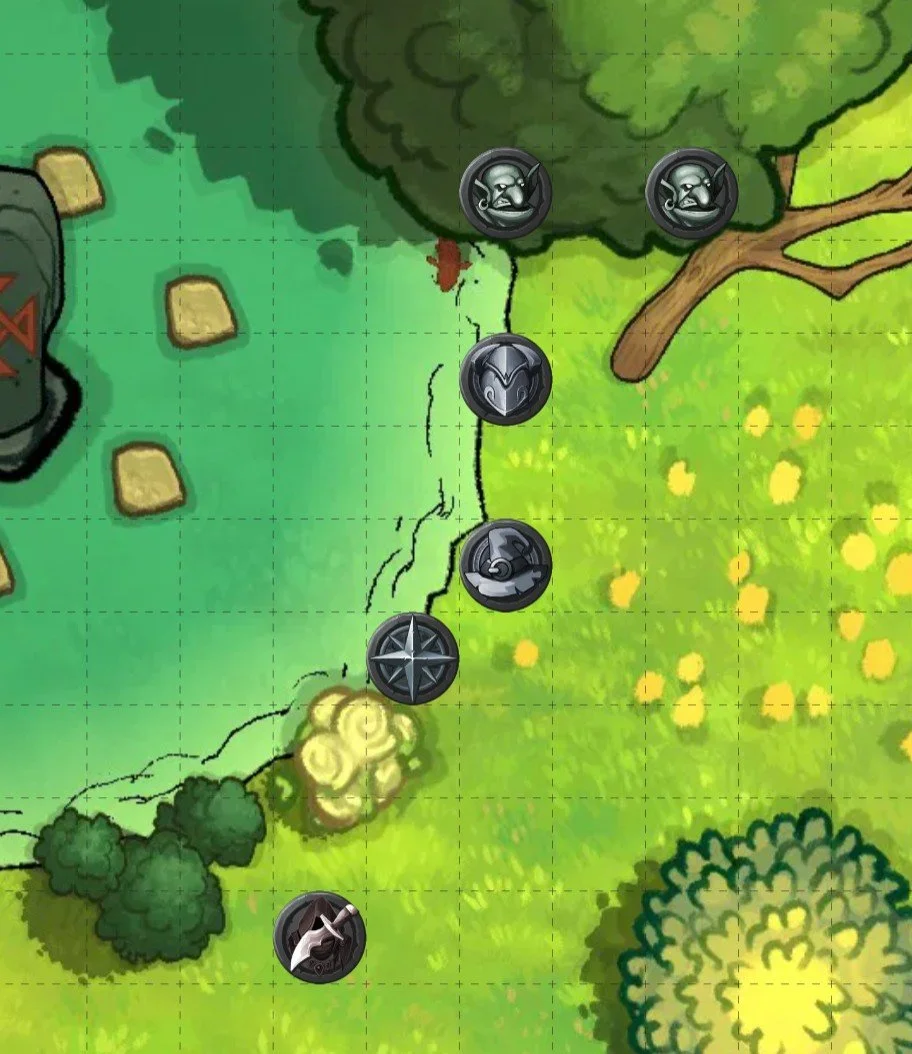
Replacing the worg with goblins
If I’d put two goblins in the bush in the north, they would be dead quickly because goblins are low-hp. One Burning Hands or just some decent attacks from the wizard+fighter could take them out on 1 round. The goblins in that northern bush would, if they want to stay alive, have to reposition away from the players and use bows. That’s inefficient and it blows the pincer somewhat.
Just because you’ve created a pincer doesn’t mean it’s strong.
So, when choosing to pincer (or flank) consider how the terms of combat favor the enemy and position your troops to do their best work. Knowing which enemies are good at which roles is important. Ranged characters need cover and distance, also they need a clear shot. STR CON brutes or high AC tanks can often solo a side. Casters need support and usually total cover since they are high priority kill-on-sight for players.
Lastly, you don’t have to divide forces evenly. Numbers are often low in D&D due to the limits of DM mental-processing power (we’re not computers) so these 2x2, 3x2, and 4x3 kinda pincers are common ways of doing pincers.
That said, never underestimate the scare of even a single modestly capable enemy joining the battle from the rear. Even if they don’t accomplish much, they’ll shake up the battlefield before they go.
Next time, I’ll talk about the pattern that isn’t a pattern - the mix.